

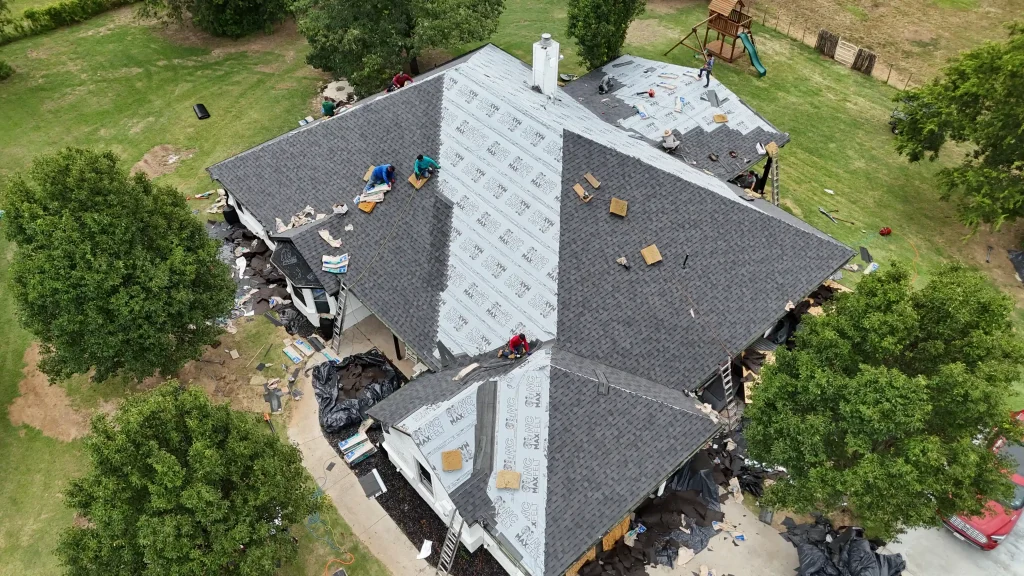
Tile Roofer in DFW

Residential – Commercial – Multi-Family

What is our tile roof repair or replacement process?

Before we visit your property, our office staff will ask a few questions to get an initial understanding of your roof’s condition—whether it may need a repair or a full replacement. However, our roofing consultant who comes onsite will conduct a thorough inspection during your appointment. We will first discuss the repair process, followed by replacement options if necessary.

Tile Roof Repair Process

While repairing a tile roof is less extensive than a full replacement, attention to detail is crucial to ensure a long-lasting repair rather than a quick fix.
  • Upon arrival, we first inspect for any cracked, damaged, or displaced tiles, noting the type and color of your tile system to ensure a perfect match.
  • After identifying all damaged tiles, we may need to inspect the decking for any rot or deterioration, as well as the underlayment, depending on the affected area.
  • Based on our findings, we’ll replace the decking, underlayment, and tiles as necessary—or simply replace the damaged tiles. New tiles are secured using roof cement or adhesive, and all edges are carefully sealed.
  • Finally, we provide you with documentation detailing the repair and your warranty for future peace of mind.

Tile Roof Replacement Process

In some cases, a tile roof may have reached the end of its lifespan, or the damaged areas are too extensive for repair, requiring a full roof replacement. While some steps overlap with tile roof repair, here are the additional procedures involved in a tile roof replacement in the DFW area:
  • Once we’ve assessed the damage and concluded that a replacement is necessary, we discuss your preferred tile roofing system options—such as clay, concrete, or slate—along with color and profile choices that complement your home’s style. Detailed options are provided further below.
  • If you decide to proceed with our estimate and company, we will begin by obtaining any necessary permits, planning the replacement schedule, and ensuring all materials and equipment are ready for the project day.
  • On replacement day, the entire roof is removed and replaced, including decking, flashing, underlayment, drip edge, ventilation, and, of course, the new tiles.
  • After completing the project, we conduct a final walkthrough to ensure your full satisfaction. Be sure to keep all documentation related to your replacement along with our warranty information for future reference.

What are the types of tile roofing systems along with their history and culture background?

  • Clay Tile – Renowned for their beauty and durability, clay tiles are a classic choice often seen in warmer climates. Their energy efficiency makes them ideal for such regions. With a rich history spanning cultures like Spanish, Greek, and Mexican, clay tiles bring a timeless aesthetic that has been embraced in America, especially for Mediterranean and Southwestern-style homes and businesses.
  • Concrete Tiles – Popular in the DFW area and moderate climates, concrete tiles offer a cost-effective alternative to clay. Designed to mimic the look of clay tiles, they are slightly less durable but typically last longer than traditional asphalt shingles. Concrete tiles provide a more modern option, having been developed in the 20th century.
  • Slate Tiles – Commonly used in the UK, France, Germany, and select American neighborhoods, slate tiles are a premium roofing choice. Though a higher investment, slate roofs are known for their exceptional longevity and elegant appearance, making them a wise long-term option.

Are there any specific things you can do to make my tile roofing system last longer? (Cleaning etc?)

  • Annual Roof Inspections: Regular yearly inspections help identify potential repair areas early, preventing small issues from turning into costly problems.
  • Cleaning and Sealing: Also known as waterproofing, this should be done every few years to preserve the tile’s integrity and protect against water damage.
  • Proper Ventilation: Ensuring adequate ventilation prevents moisture buildup, reducing the risk of mold growth and wood rot.

How does a tile/metal roofing system compare to other systems like an asphalt shingle?

Pros of Tile Roofing

  • Longevity: Tile roofing systems can last 30+ years longer than many other materials.
  • Fire Resistance: Naturally fire-resistant, providing enhanced safety for your home.
  • Energy Efficiency: The natural properties of tile help regulate indoor temperatures, keeping your home cooler in summer and warmer in winter.
  • Low Maintenance: While regular inspections are recommended, tile roofs generally require fewer repairs over time.
  • Unique Aesthetic: Tile roofs offer a distinctive and attractive appearance that enhances curb appeal.
  • Durability: Highly resilient against hail, wind, and severe weather common in the DFW area.

Cons of Tile Roofing

  • Higher Cost: Tile roofing usually involves a larger initial investment compared to other roofing materials.
  • Weight: Tile systems are heavier and require a sturdy structural framework to support the additional load.
  • Complex Repairs: Repairing tile roofs can be more difficult and time-consuming, as matching tiles and ensuring proper installation require specialized skills, leading to higher repair costs.
R&R Restoration

R&R Restoration

Typically replies within an hour

I will be back soon

R&R Restoration
Hey there 👋
How can I help you?
Messenger